How Does Calgary Maintain Affordable Housing Supply in a Booming Market?
The real estate market in Calgary is nearing a critical point concerning affordability. However, must homeownership become unattainable, or is there potential for improvement in this scenario?
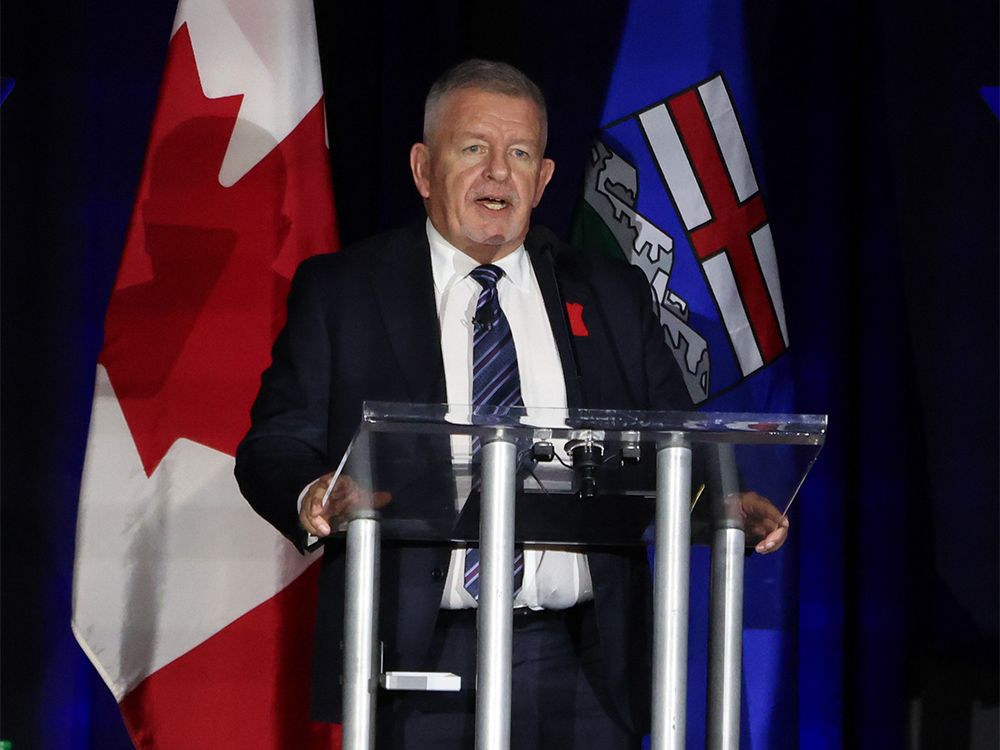
The Building Industry and Land Development Association in the Calgary region organized an event called "Unlocking Doors: Housing Supply and Affordibility Summit" last month. The gathering aimed to bring together individual sector specialists who discussed strategies to ensure that market homes remain accessible to potential buyers.
We're the second most affordably priced metropolitan area in Canada," notes Brian Hahn, CEO of BILD Calgary Region. "While this is positive news, it may attract more residents as well, which means we must increase our efforts.
Calgary's housing market for homes has surpassed what most consider to be an affordable price range.
The Canada Mortgage and Housing Corporation defines housing as affordable when households dedicate less than 30% of their pre-tax income towards covering mortgage payments, property taxes, and utility costs. According to RBC’s Thought Leadership Series on Canadian Housing quarterly reports, this figure has remained over 40% in the Calgary region for the last three consecutive years. In contrast, the recent report indicates an overall national average of 58.4% during the final quarter of 2024. Among major cities, Vancouver showed the highest level of unaffordability with 92.8%, followed closely by Toronto at 70.8%. On the more favorable end, Edmonton had the lowest rate among these areas at 33.6%.
Although the answer to strained supply and elevated costs may seem straightforward—construct additional residences—the actual process of boosting market housing and enhancing affordability encompasses numerous interrelated factors.
"The primary hurdles are the duration from ground-breaking to completion, and the expense. Any reduction in time can significantly aid the budget, and every savings measure implemented on the financial front can make a difference," Hahn stated.
SHORT ON HOUSING
As stated by CMHC, Alberta requires an additional 130,000 housing units by 2030 to accommodate the high level of migration observed over recent years.
One could argue that Alberta’s constructors and real estate developers are capable of rising to the occasion. The province saw a historic number of new construction projects begin in 2024, exceeding 46,000 starts. Nonetheless, as Hahn highlights, the situation isn’t entirely straightforward. A major concern is the graying workforce with specialized skills.
We must ensure that individuals enter sectors with skills that facilitate land development and housing," Hahn stated. "Trade professions are an important part of this, and we appreciate the efforts made by both provincial and federal governments to support these areas. However, we also advocate for targeted initiatives regarding immigration so that among new arrivals to Canada, there will be those with expertise specifically in construction and residential building.
LAND COSTS
The primary factor driving up the cost of real estate in both Vancouver and Toronto has been the price of land, as highlighted by Wendell Cox, who leads Demographia—a U.S.-based international public policy organization.
Based on data from Altus and RBC, a pre-pandemic analysis conducted in 2020 revealed that constructing an average-sized 1,500-square-foot home came at comparable costs across different Canadian cities—Winnipeg had expenses totaling $236,250; Toronto reported $247,500; and Vancouver noted $303,750. However, when examining the expense attributed solely to purchasing the land for these homes, significant disparities emerged: Winnipeg’s share stood at $84,050, accounting for approximately 26% of the overall expenditure; meanwhile, in Toronto, this figure reached up to $856,600, constituting around 77%; similarly high proportions were observed in Vancouver with land costing $1,095,950, which made up about 78%.
Cox attributes rising land costs to urban growth boundaries. These barriers can be natural features like bodies of water or mountain ranges found in cities such as Vancouver and Toronto. Elsewhere, they result from human-made policies limiting expansion and development, often justified by the aim to prevent urban sprawl.
We must consider urban expansion," Cox stated. "The cost of preventing sprawl would be a decrease in housing affordability.
He praised the City of Calgary for aiming at affordability in a genuine manner.
"My experience indicates that few regions genuinely aim to enhance affordability. The supply must be affordable and align with the preferences of households," he stated.
We must reinstate a competitive market for land and encourage densification; however, the more significant aspect is allowing urban growth to maintain affordable housing.
DENSIFICATION
Salim Furth, a senior research fellow and the director of the Urbanity project at the Mercatus Center at George Mason University, visited Alberta where he took a tour of Mahogany—one of Calgary’s newest peripheral neighborhoods located in the far southeastern part of the city—and also explored several emerging districts in Edmonton.
"The expansion observed in Alberta does not constitute sprawl," he remarks, highlighting that these new neighborhoods are designed with high-density concepts in mind.
Regarding the densification of older neighborhoods, Furth suggests making sure that the current infrastructure can accommodate it.
A city operates on its sewer systems," he stated. "Infill comes at a cost when done extensively — capacity has its bounds, so understand your limitations.
FINANCING
Acquiring land for development comes at a cost. According to Kevin Lee, the CEO of the nationwide Canadian Home Builders' Association, exploring alternative funding methods could be beneficial.
Be it through MUDs (which operate independently from city administrations and handle utility services and infrastructure), user charges, or the local tax revenue—where part of this should logically be directed—he stated. 'Everyone needs to collaborate to develop alternative financing methods for infrastructure that won’t lead to increased costs but will offer a distinct approach to funding these projects.'
Prime Minister Mark Carney has recognized the expenses associated with land development as a bottleneck and is contemplating policies that might reduce the development charges levied by municipalities, according to Calgary Mayor Jyoti Gondek, who questioned where the shortfall would be covered from otherwise.
She advocated for establishing a new federally funded grant designed to directly assist real estate developers in covering expenses, thereby alleviating the financial strain on taxpayers.
“Calgary is no longer able to directly accept federal funding — we know that there has to be provincial involvement. That means there are more steps and people involved in approvals and more red tape at a time we need to be building more homes,” she said, clarifying why direct grants to developers would be most effective.
"We require assistance with the supporting infrastructure necessary for housing expansion. Without water pipelines, wastewater management, public transport, and power supply capabilities, progress in housing halts," she stated.
Alex Ciappara, the chief economist for the Canadian Banking Association, emphasized that it’s crucial for discussions around financing to shift focus away from rules concerning individual mortgage eligibility and instead concentrate on more effective methods of funding housing supply improvements.
Affordability isn’t just tied to demand; it also depends on the availability of homes," he stated. "Securing land acquisition loans can be challenging.
RECOMMENDATIONS
Over the next few weeks, BILD Calgary Region will gather insights from this symposium with the aim of improving housing affordability and supply in Calgary.

Post a Comment for "How Does Calgary Maintain Affordable Housing Supply in a Booming Market?"